
Is Blogging Still Worth It for Local Small Businesses?
For many owners, local small business blogging is no longer the obvious first step when the real goal is getting more calls, appointments, foot traffic, and paying customers.
For years, small business owners were told the same thing:
“Start a blog.”
“Post every week.”
“Write helpful articles.”
“Google will send you traffic.”
That advice made sense at one time. But the online landscape has changed.
Today, for most local small businesses, traditional blogging is no longer the best use of limited marketing time — especially if the goal is to attract more customers from your immediate area.
At Rhema Marketing, we work with business owners who are not trying to become media companies. They are trying to get more calls, more appointments, more foot traffic, more leads, and more paying customers.
That requires a different approach.
Why Blogging Has Changed
A recent article by Daniel Stanica, titled The Great Blogging Collapse, makes an important point: the old blogging model has been seriously weakened.
His argument is simple but powerful. Many blogs were built on the idea that Google would keep sending free traffic to helpful articles. Business owners and publishers created posts answering common questions, hoping those articles would rank and bring in visitors.
But that model has changed.
Google updates, AI-generated answers, and changing search behavior have reduced the value of many traditional blog posts. Informational articles such as “how to,” “what is,” or “5 tips for” can now be summarized directly in search results. That means people may get the answer without ever clicking through to the original website.
For a small business owner, that matters.
You may spend hours writing a blog post, but that does not mean it will lead to phone calls, form submissions, appointments, or sales.
Local Customers Search Differently
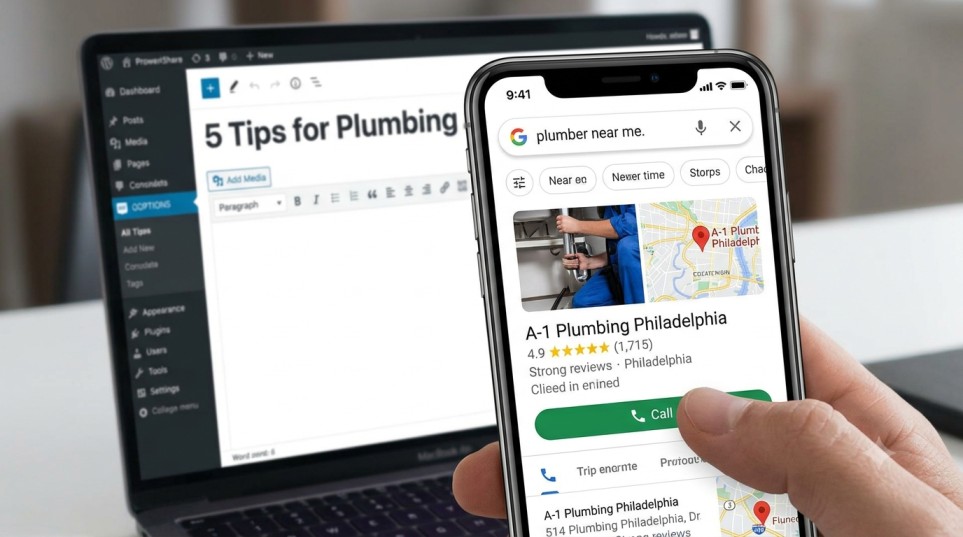
Local customers usually are not browsing your blog for entertainment.
They are searching with intent.
They type things like:
“plumber near me”
“tax preparer in Philadelphia”
“mobile bartender near me”
“website designer for small businesses”
“HR consultant for small business”
“family therapist near me”
“best salon in my area”
These are decision-based searches.
The person is not just looking for information. They are looking for a provider they can trust.
That means your marketing should focus less on general blogging and more on helping local customers quickly answer these questions:
Can you solve my problem?
Do you serve my area?
Can I trust you?
What do other customers say?
How do I contact you?
What happens next?
What Works Better Than Traditional Blogging

For most local small businesses, the better path is a local visibility and trust-building system.
That means focusing on the marketing assets that directly help people find you, trust you, and contact you.
1. Optimize Your Google Business Profile
Your Google Business Profile is often more important than your blog.
When someone searches locally, your profile may appear before they ever visit your website. That profile should be complete, accurate, active, and persuasive.
At minimum, your profile should include:
Updated services
Correct hours
Strong business description
Quality photos
Regular updates
Customer reviews
Answers to common questions
Clear contact information
For local businesses, Google Business Profile activity can often produce more practical results than publishing another blog post.
2. Build Strong Service Pages
A clear service page usually has more value than a generic blog article.
For example, a page titled:
“Commercial Cleaning Services in Philadelphia”
is likely more useful than a blog post titled:
“5 Tips for Keeping Your Office Clean.”
Why?
Because the service page matches what a ready-to-buy customer is actually searching for.
Your website should clearly explain what you offer, who you serve, where you serve them, and how someone can take the next step.
3. Collect and Use Reviews
Reviews are one of the strongest forms of local marketing content.
A good review can do what a blog post often cannot: build trust at the exact moment a potential customer is deciding whether to call you or a competitor.
Small businesses should make review collection part of their regular marketing routine.
Ask satisfied customers for reviews. Feature testimonials on your website. Share customer feedback on social media. Use real words from real customers to build credibility.
4. Share Proof, Not Just Advice
Generic advice is easy to copy. Proof is harder to ignore.
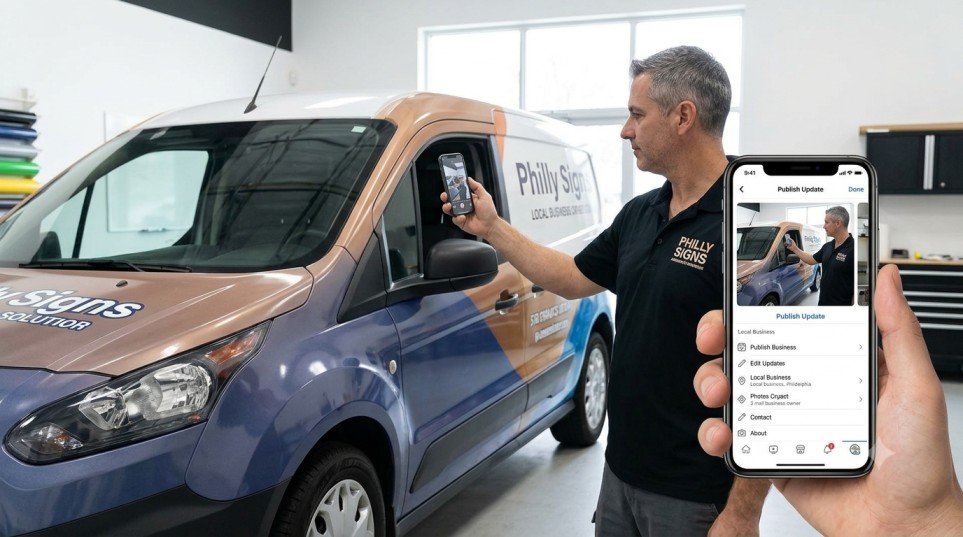
Instead of spending all your time writing general blog posts, share content that shows your actual work.
That could include:
- Before-and-after examples
- Customer success stories
- Project highlights
- Frequently asked questions
- Short case studies
- Photos from real work
- Local event participation
- Behind-the-scenes updates
- Common customer problems you solve
This kind of content helps people see your business in action.
It also gives Google and potential customers stronger signals about who you are, what you do, and where you do it.
5. Use Short Updates More Often
Not every piece of content needs to be a full blog post.
For many small businesses, a short update is more realistic and more useful.
You can publish:
- A Google Business Profile post
- A short Facebook update
- A LinkedIn post
- An Instagram caption
- A quick email to your list
- A short customer story
- A seasonal offer
- A reminder about a service
The goal is not to “blog more.”
The goal is to stay visible, useful, and easy to contact.
So, Should Local Businesses Blog?
For most local small businesses, blogging should not be the main marketing strategy.
A blog can still help in certain cases. It may be useful if your business has specialized expertise, if customers do a lot of research before buying, or if you can create original content based on your real experience.
Examples may include legal services, healthcare, financial services, consulting, therapy, home improvement, B2B services, or education-based businesses.
But even then, the content should not be generic.
The strongest content is based on real questions, real customers, real projects, real outcomes, and real local experience.
The Better Recommendation
If you only have a few hours each week for marketing, do not start by writing a blog post.
Start here:
- Update your Google Business Profile
- Ask for one customer review
- Improve one service page
- Post one short local update
- Share one customer success story
- Follow up with warm leads
- Make your website easier to understand and easier to contact you from
That is a stronger weekly marketing routine for most local businesses.
Final Thought
The question is not whether blogging can ever work.
The better question is:
“Is blogging the highest-value use of my limited time?”
For most local small business owners, the answer is no.
Your time is better spent building local visibility, trust, proof, and follow-up systems that help nearby customers choose you.
At Rhema Marketing, we help small businesses become easier to find, trust, and contact online — without unnecessary complexity.

Bob Coleman
Prinicipal




0 Comments