
For most small business owners, search engines are simple: you type something into Google and click a link.
You probably think of “search” as typing something into Google and clicking a link.
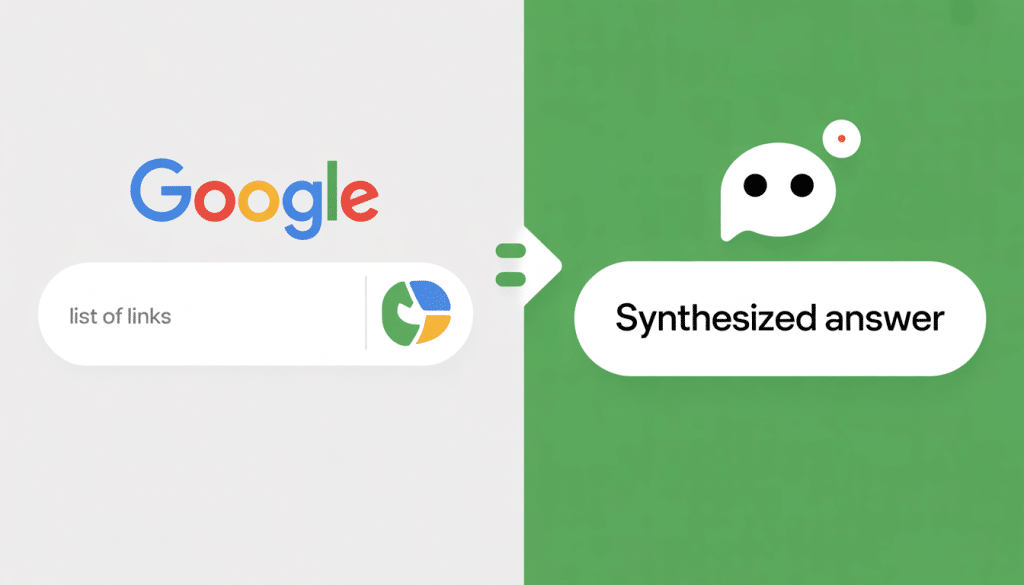
That’s how it worked for 20 years.
It still mostly works that way — but the ground is shifting, and if you’re building your client acquisition strategy right now (which you are), this is exactly the right time to understand what’s changing.
Let’s keep it simple and practical.
Google Is Still the King — But It’s Getting Harder to Win There
As of March 2026, Google holds 90.01% of worldwide search traffic. Nine out of ten searches on the planet go through Google. So yes, Google still matters — a lot.
But here’s the catch: Google’s own AI Overviews now answer many questions directly on the search results page, before a user ever clicks a link. That means even if you rank well, fewer people may actually visit your website.
What this means for you: A website and a Google Business Profile are still non-negotiable. But just “having a website” is no longer enough. Your content has to be good enough that Google and AI tools want to reference it.
Bing Is More Relevant Than You Think
Most people ignore Bing. That’s actually a small advantage for you.
In the United States, Bing holds over 10% of search traffic — and on desktop, it’s even higher. Less competition means it can be easier to get found there.
Here’s the kicker: ChatGPT’s search functionality relies on Bing’s index to retrieve web results. So if your business shows up well in Bing, there’s a path to being surfaced in ChatGPT answers too.
What this means for you: If you’re doing the right things for Google SEO, you’re already getting Bing credit. Make sure your site is listed in Bing Webmaster Tools — it’s free and takes 10 minutes.
AI Search Is the New Frontier (And It’s Growing Fast)

This is the big one.
Tools like ChatGPT, Perplexity, and Google’s own AI features are changing how people find information. Instead of a list of 10 blue links, users get a direct answer — with your business either mentioned or not.
ChatGPT has reached 900 million weekly active users as of early 2026. That’s not a niche tool anymore. That’s a search engine.
AI referral traffic to websites is still a small slice — about 1% of total web traffic — but it grew roughly sevenfold between early 2024 and mid-2025.
The industry has a new term for showing up in these AI answers: GEO — Generative Engine Optimization. It’s young, it’s evolving, and early movers will have an advantage.
What this means for you: The businesses that get cited by AI are the ones with clear, well-written, credible content on their websites. This is not about being technical. It’s about being authoritative and helpful online. That’s the same foundation we’re building in the DMA.
People Are Also “Searching” on Amazon and TikTok
Search isn’t just search engines anymore.
Research suggests that 56% of online product searches now begin on Amazon — not Google. And TikTok has become a go-to discovery tool for younger audiences looking for recommendations, reviews, and how-to content.
What this means for you: If you sell products, Amazon is a search engine you can’t ignore. If your audience skews younger, TikTok is how they find things. Neither platform works like Google — they each have their own logic.
The Big Takeaway for DMA Participants
You don’t need to master all of this right now.
But you do need to understand that search is no longer one thing. It’s Google + Bing + ChatGPT + Amazon + TikTok — and more. Each platform reaches your potential clients in different ways.
The good news? The fundamentals still win everywhere. Clear information about who you are, what you do, who you serve, and why you’re credible — that’s what Google ranks, what AI tools cite, and what customers trust.
That’s exactly what you’re building in the Digital Marketing Accelerator.
You’re not just building a website or a social profile. You’re building a presence that works across all the places your future clients are searching.
And that — that’s a client acquisition engine.
Want help figuring out where your ideal clients are actually searching? That’s one of the things we dig into inside the Digital Marketing Accelerator. Let’s build your system.

Bob Coleman
Prinicipal




0 Comments