
Website traffic dropped? Your gut says something’s wrong. But your phone is ringing just as much as it did last year, maybe more.
If that sounds familiar, you’re not alone. And it may not be the bad news it looks like. A new survey from Search Engine Journal, one of the biggest publications in the search industry, found the same pattern showing up across a lot of websites.
In this post, we’ll explain what’s going on, why fewer visitors can still mean the same number of customers, and which numbers you should actually be watching.
What the survey found
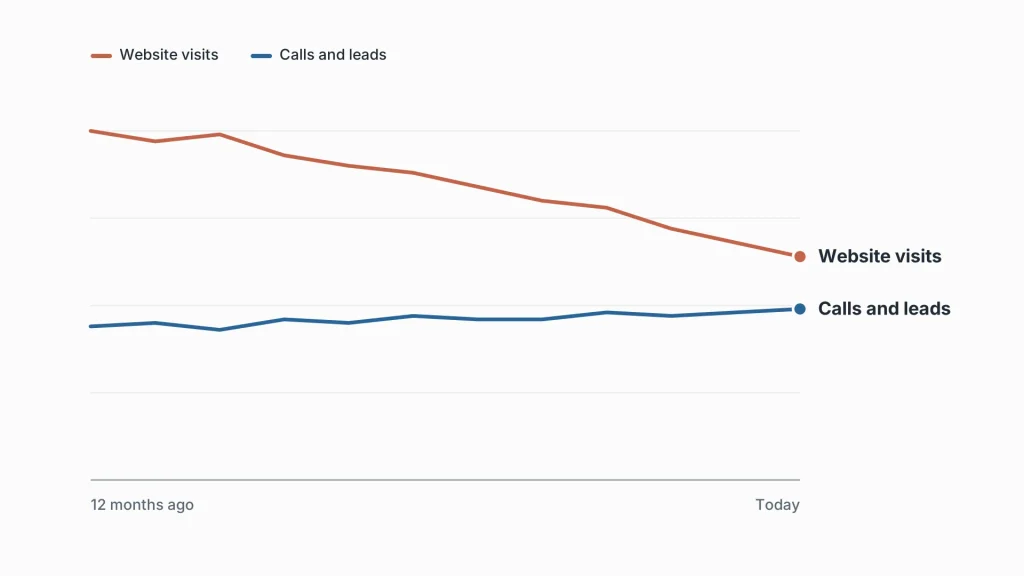
In June 2026, Search Engine Journal surveyed 166 experienced SEO professionals. SEO, or search engine optimization, is the work of getting a business to show up in Google. These are people who watch website numbers for a living. Here’s what they reported about the past year:
- 40% said their search traffic went down.
- 25% saw traffic drop while leads and sales held steady or went up.
- 14% had flat traffic and more leads.
- Only 15% lost both traffic and customers.
Add those middle two together and you get 39%. That’s nearly four in ten who got the same or better business results from the same number of visitors, or fewer.
A quick definition: a “lead” or “conversion” is any time a visitor does what you want them to do. They call, fill out a form, or book an appointment.
Why it happens: Google answers the casual questions now
Think about everyone who used to land on your website. Some were ready to hire you. Plenty weren’t.
A homeowner wondering how often to service a furnace might have read your blog post, then left. That was nice for your traffic numbers. It didn’t do much for your bank account.
Today, Google often answers that question itself. It puts an AI-written summary right at the top of the results page. The homeowner gets the answer and never clicks. They weren’t going to call you anyway.
The person whose furnace quits on a January night in Mayfair is different. They still click. They still call. Those are the visitors you’re still getting, and they’re the ones who pay the bills.
One of the experts in the report made the same point: the visitor who stopped showing up probably wasn’t going to buy in the first place.
Before you blame AI, rule out these four things
AI answers aren’t the only reason website traffic drops. Check these first. Each takes a few minutes.
- Your tracking broke. If visits fell to almost nothing overnight, the tracking code may have dropped off your site. That often happens after a plugin or theme update. Ask whoever built your site to confirm it’s still on every page.
- You redesigned or moved your website. New page addresses without redirects can wipe out traffic. A redirect is a setting that sends visitors and Google from an old page to its new home.
- It’s the season. Compare this month to the same month last year, not to last month. A landscaper’s January will always look slow next to June.
- Google changed its rankings. Google updates how it ranks websites several times a year. If your drop lines up with a specific week, an update may be the cause.
If none of those fit and your calls are holding steady, AI answers are the most likely reason.
What to track instead of visitors
Visitor counts were always a rough stand-in for business. Now they’re a worse one. Here’s what to watch instead. You can do all of it yourself, for free.
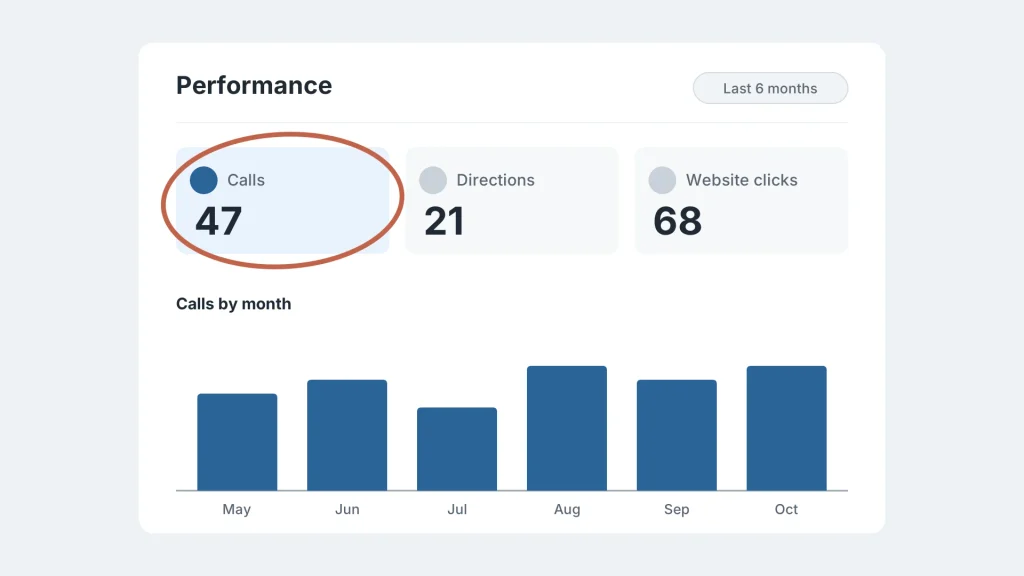
- Calls from Google. Your Google Business Profile is your free listing on Google Maps and search. It shows how many people called you straight from that listing. Check the Performance section once a month.
- Form fills and booking requests. Count them every month. A simple spreadsheet is plenty.
- Where each new customer came from. Ask every new caller, “How did you hear about us?” Write the answer down. This one habit fills gaps no software can.
- How many leads turn into paying jobs. Ten calls that become eight jobs beat 30 calls that become two.
- Average job size. If your Google leads tend to be bigger jobs, that matters more than how many there are.
If you only track one thing, make it calls and customers from Google. That’s the number that tells you whether search is working for you.
When fewer visitors is a real problem
We’d be doing you a disservice if we said every traffic drop is fine. It isn’t. Here are three times to pay attention:
- Your calls dropped along with your traffic. That’s a real problem, and 15% of the pros surveyed were in that spot. Look at which pages lost the most visits. Often it’s your main service pages. Fix those first.
- You depend on people finding you before they need you. Think of a salon or landscaper building a base of regular clients. Losing that early visibility can mean fewer customers down the road. Another expert in the report warned that a better conversion rate today doesn’t make up for a shrinking audience over time.
- You can’t tell what happened. If you’re not tracking calls or forms, that’s the first thing to fix. 8% of respondents couldn’t answer the survey question at all for that reason.
The test is simple. Is your phone ringing less? If not, take a breath. If so, it’s time to dig in.
Common questions
Why did my website traffic drop suddenly?
A sudden, steep drop is usually technical: broken tracking, a website redesign, or pages that stopped loading. A slow, steady decline over months is more often caused by Google’s AI answers or a ranking update.
Is less website traffic bad for my business?
Not always. If calls, form fills, and booked jobs are holding steady, you’re likely losing visitors who were never going to hire you. If those numbers are falling too, it’s worth a closer look.
How do I see how many calls come from Google?
Open your Google Business Profile and go to Performance. It shows calls, direction requests, and website clicks from your listing, month by month.
The bottom line
Fewer website visitors doesn’t automatically mean a smaller business. For a lot of service businesses, the people Google stopped sending were the ones who were never going to call. Track calls, forms, and paying customers, and you’ll know where you really stand.
Not sure what your numbers are telling you? Reach out to Rhema Marketing. You’ll talk directly with Bob, the strategist who’d do the work. We’ll look at your Google Business Profile and website numbers with you and tell you in plain English whether there’s a problem worth fixing. If there isn’t, we’ll say so.
Source: State of Search 2027, Search Engine Journal (survey of 166 SEO professionals, June 2026).

Bob Coleman
Prinicipal





0 Comments