
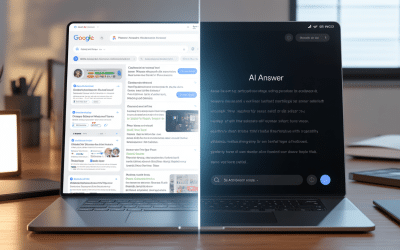
If you’ve noticed changes in your website traffic, search visibility, or online inquiries lately, you’re not alone. Search engines are evolving quickly as artificial intelligence becomes part of how people discover information.
There’s been a lot of noise online suggesting that “SEO is dead” or that “AI is replacing websites.” That’s not accurate—especially for local service businesses and nonprofits.
What is changing is what kind of content gets rewarded.
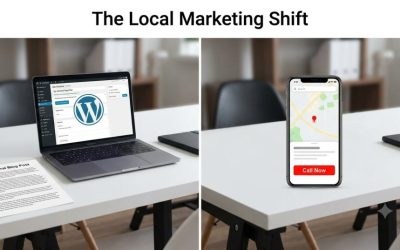
Here’s what we’re seeing: A home services company came to us after their blog traffic dropped 40% in six months. Their “10 Tips” posts were no longer driving calls. But their service pages and project gallery? Those were steady—and actually converting better than before.
That pattern is happening across industries. Local SEO is crucial for small businesses because Google emphasizes geographic proximity and relevance in local search results, making it easier to compete locally than nationally.
The good news?
This shift actually favors organizations doing real work in the real world.
What’s Changing in Search (In Plain English)

Search engines and AI tools are getting very good at summarizing generic information.
That means content like:
- “10 Tips for Choosing a Contractor”
- “What Is Nonprofit Management?”
- “Everything You Need to Know About [Service]”
…is no longer enough on its own to stand out.
But content rooted in real experience, real services, and real impact is becoming more valuable—not less.
The Three Types of Website Content (and What to Focus On)

1. Transactional Content (Strong and Stable)
This includes:
- Service pages
- Program descriptions
- Product or offering pages
These pages clearly explain what you do and who you help. For local businesses and nonprofits, this content remains essential and resilient.
This should be your foundation.
2. Experience-Based Content (Increasing in Value)
This includes:
- Case studies
- Client or community impact stories
- Before-and-after examples
- Program outcomes
- Testimonials with context
AI tools can’t replicate firsthand experience. This type of content helps search engines—and people—understand why your organization is credible.
3. Generic Informational Content (Declining in Value)
This includes:
- Broad blog posts anyone could write
- Content without local, organizational, or experiential context
This doesn’t mean blogs are “bad.” It means blogs should support your authority, not be the main SEO strategy.
Where to focus (for local businesses)
- Prioritize discoverable/SEO content: blog posts and how‑to guides consistently rank among the most effective formats for bringing in qualified traffic and answering customer questions.
- Invest in conversion content: targeted landing pages, service pages, and clear calls‑to‑action typically have the greatest impact on leads and sales once visitors arrive.
- Maintain, but don’t obsess over, core content: polish it a few times per year; spend more ongoing effort on pieces that can rank, get shared, or convert.
See, https://automationagency.com/these-are-the-six-types-of-content-that-should-be-on-every-website/
See, AI Powered Content Writing
What You Can Do This Week
Start with a simple content audit:
Step 1: List your top 10 most-visited pages
Check Google Analytics or your website platform’s stats.
Step 2: Categorize each page
Is it transactional, experience-based, or generic informational?
Step 3: Look for gaps
- If you have 15 blog posts but no case studies, you know where to focus.
- If your service pages are thin or outdated, start there.
- If you have great client stories but they’re buried in a newsletter archive, bring them forward.
Step 4: Prioritize clarity
Make sure each service page and your homepage answer: What do you do? Who do you help? Why should someone trust you?
You don’t need to overhaul everything at once. Start with your most important pages.
Why Your Homepage Matters More Than Ever

Most organizations treat their homepage like a welcome mat.
In the AI era, it’s more like a summary page for machines and humans alike.
Your homepage should clearly state:
- What you do
- Who you serve
- What makes you qualified
- Where you operate
- Why your organization exists
This clarity helps:
- Search engines
- AI tools
- Potential clients or donors
If this information is buried across multiple pages, it’s harder for systems—and people—to understand your value.
What AI Can’t Replace (and Never Will)

For local businesses and nonprofits, your strongest assets are things AI cannot generate:
- Your lived experience
- Your community impact
- Your professional credentials
- Your team’s expertise
- Your real-world results
The goal isn’t to “beat AI.” The goal is to make your real work visible and understandable online.
Quick Self-Assessment: Is Your Website Ready for the AI Era?
Ask yourself these five questions:
- Does your homepage clearly explain what you do, who you serve, and where you operate—without requiring someone to click around?
- Do you have at least 3-5 examples of your actual work—case studies, project stories, or community impact examples?
- Are your service pages detailed enough that someone could understand your expertise and process without calling you first?
- When someone searches “[your service] near me” or “[your organization name],” does your website accurately represent your current offerings?
- Is your “About” page about your qualifications and mission—or just generic statements anyone could write?
If you answered “no” to more than two of these, your website likely needs a structure update more than it needs more content.
How Rhema Marketing Helps
At Rhema Marketing, we’re not focused on pumping out content or chasing trends.
We help organizations:
- Identify which content still matters
- Restructure websites for clarity and credibility
- Highlight expertise and impact in ways search engines understand
- Use AI responsibly—as a support tool, not a replacement for human insight
SEO isn’t disappearing. It’s becoming more honest.
And that’s a good thing for organizations doing meaningful work.

Bob Coleman
Prinicipal



0 Comments